
Book reviews: Books written in response to the war on Ukraine
Jim Memory
Geychenko, Soloviy and Ustinovich, Eds., Beatitudes and Terror: A Ukrainian Theological Response to Russian Aggression, Langham 2025
Soloviy, Roman, Ed., Light in the Valley of the Shadow of Death: Stories of Ukrainian Christians During the War, Langham 2025
Siniy, Valentin, Serving God Under Siege: How War Transformed a Ukrainian Community, Eerdmans, 2025
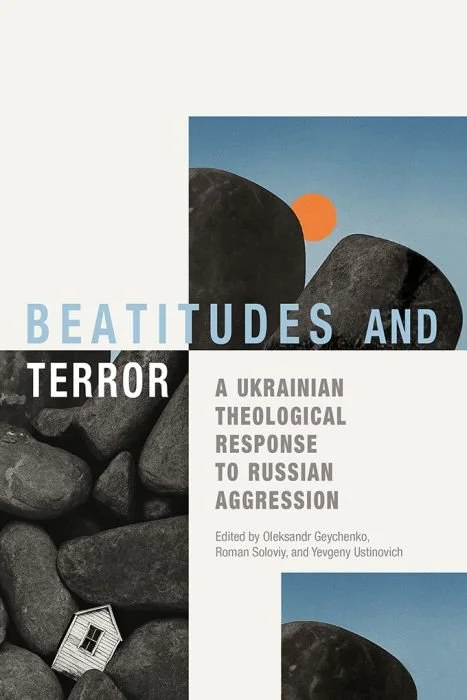
Beatitudes and Terror is a commentary on the Beatitudes written from the context of the Russian war on Ukraine. Nine Ukrainian evangelical pastors and theologians reflect on the words of Jesus in Matthew 5 and bring their theological reflections into dialogue with their personal and corporate experience of trauma, grief, and indignation.
The authors face the hard questions head-on: “How to be a “peacemaker” if the enemy does not seek peace? What does it mean to “hunger and thirst for righteousness” if the propaganda distorts understandings of right and wrong? How to remain “pure in heart” amid gore and death? What does “meekness” look like when faced with the need to protect your homeland?” (p.xiii)
Yet, as the authors observe, the Gospel of Matthew was not written for “armchair theologians” but for Christians in conflict. The first readers were a persecuted and marginalised community whose homeland was plunged into chaos as Jerusalem and its Temple was destroyed. The Beatitudes were written for the traumatised and persecuted.
After a helpful introduction establishing some important theological foundations, there follow eight chapters which are each dedicated to a separate beatitude.
The first chapter considers the meaning of “the poor in spirit” surveying the biblical and historical perspective before turning to its meaning in Ukrainian literary tradition and how this phrase might be contextualised for a country at war. As the authors note, “Hope in international institutions, which were supposed to prevent this war from starting, died first.” (p.40) Yet the poor in spirit are found to be rich in faith and in hope in God, something which I found to be true in every believer I met when I have visited Ukraine.
Chapter Two is a call to recover mourning as a tradition and a normative Christian practice and Chapter Three is a reflection on the paradoxical nature of Christian meekness. In this present moment when, both in Ukraine and across the world, “might makes right” is becoming once again the dominant political theory, this call to consider the meekness of Jesus is a prophetic word to us all.
The fourth chapter asks what hungering for righteousness means in a context of war, concluding that righteousness cannot be separated from justice and truth. “Truth is the ability and courage to call things by their names, refusing euphemisms that hide reality and distort its perception…euphemisms such as “situation”, “conflict”, or “crisis” are used that blur reality and substitute the essence of events.” (p.117, 118)
Chapter Five is a reflection on mercy, not as an abstract idea, but one that is grounded in the lived experience of God’s people. As the author of the chapter puts it, “war serves as a test of mercy” (p.135) adding that, ultimately, “mercy is what identifies the followers of Yahweh.” (p.138)
The sixth chapter reveals a connection between the heart and the ability to see. Those who are pure in heart will see God and draw near to those who are suffering and thus make the presence of God palpable.
Chapter seven is a reflection on peace-making in a time of war. The author highlights the spiritual nature of peace-making but also that reconciliation necessarily requires repentance. “The church must be a space where truth is not sacrificed for the sake of hasty “pacification” and where justice leads to genuine reconciliation.” (p.183)
The final chapter places the religious persecution in the occupied territories of Ukraine in the context of global trends of violence against Christians. It also highlights how David’s Psalms of Lament have transformed the liturgical practice of many Ukrainian churches, giving them a language to express to God their lament, anger, and cries for justice: “Simply put, Ukrainian Christians have begun to cry more, to be more angry, and to strive for justice more”. (p.198)
This book is a gift to the global church. Birthed in brokenness, these pages of reflection on the blessedness of God’s people even under fire, have so much to say to Christians everywhere. I leave the final word to the authors themselves:
“Our old life has already been destroyed, and no one even knows when the time of post-war reconstruction of the country will begin. We are going through a period of deep darkness, and most likely this darkness will only intensify for some time – we do not know how long, only that it is not forever. We reflect on the words of Jesus, as much as possible in our liminal state, and find a source of strength to worthily endure all the trials with him today, “here and now” – and he asks for nothing more (Matt 6:34).” (p.16)
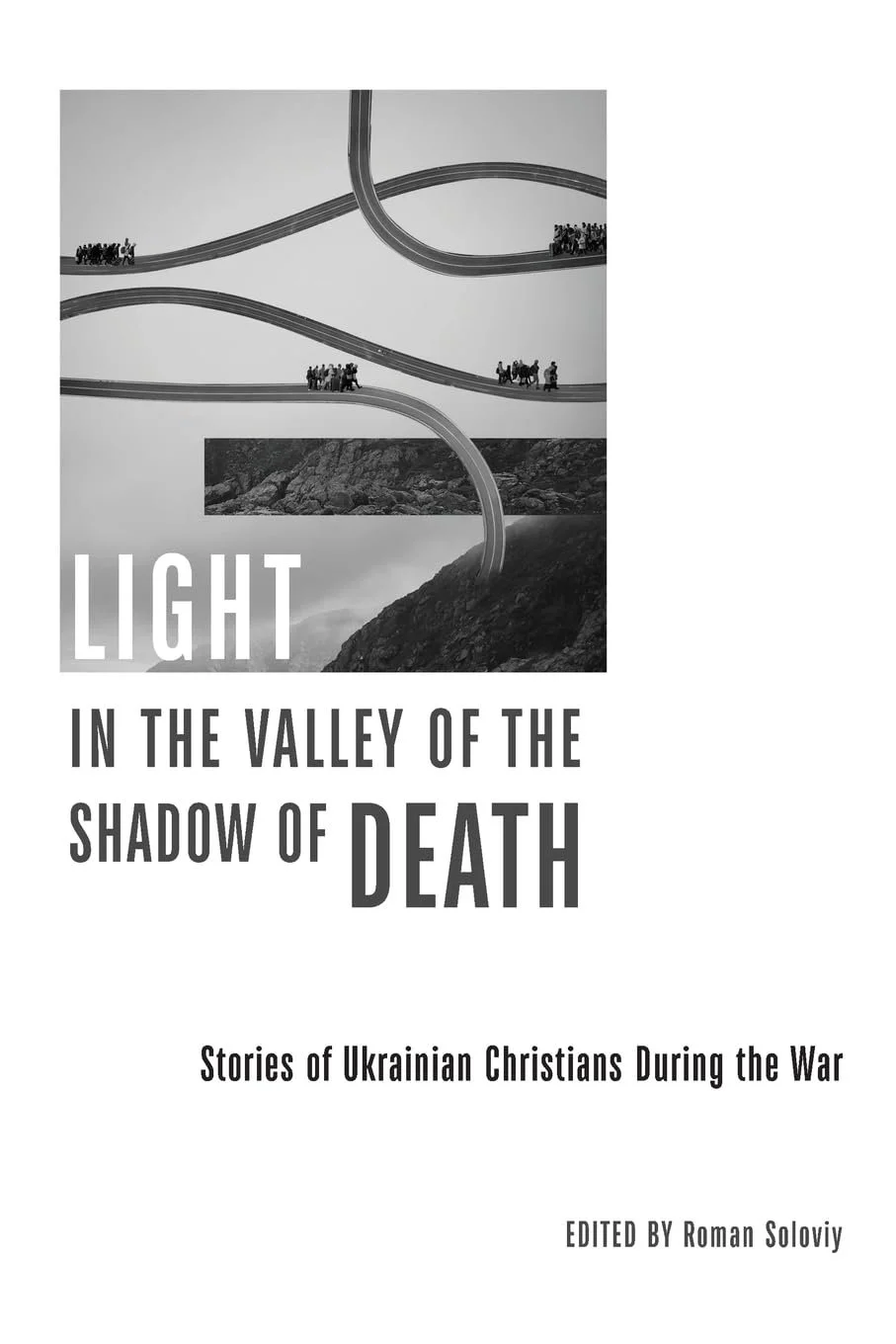
Light in the Valley of the Shadow of Death is an anthology of stories. Twelve Ukrainian Christians from different spheres of society tell their stories of life and faith since the first days of the Russian war against Ukraine.
The first story is a theologian’s chronicle of eleven days in February 2022. Hour by hour, thoughts and experiences, messages from others, and personal correspondence, are stitched together to tell a story of those first days of the war. As the days and hours pass, the author wrestles with his existential and theological questions and invites us to do the same.
More stories follow from a seminary professor, a writer, an educator in exile, two military chaplains, three soldiers of different ranks serving in the army, the wife of a soldier, the wife of a fallen hero, and finally from a pastor. As the editor puts it, “While these stories reveal the horrors and darkness of war, they are also a testament to the light and healing that they have encountered, revealing how faith is intertwined with doubt, fear with courage, and loneliness with belonging.”
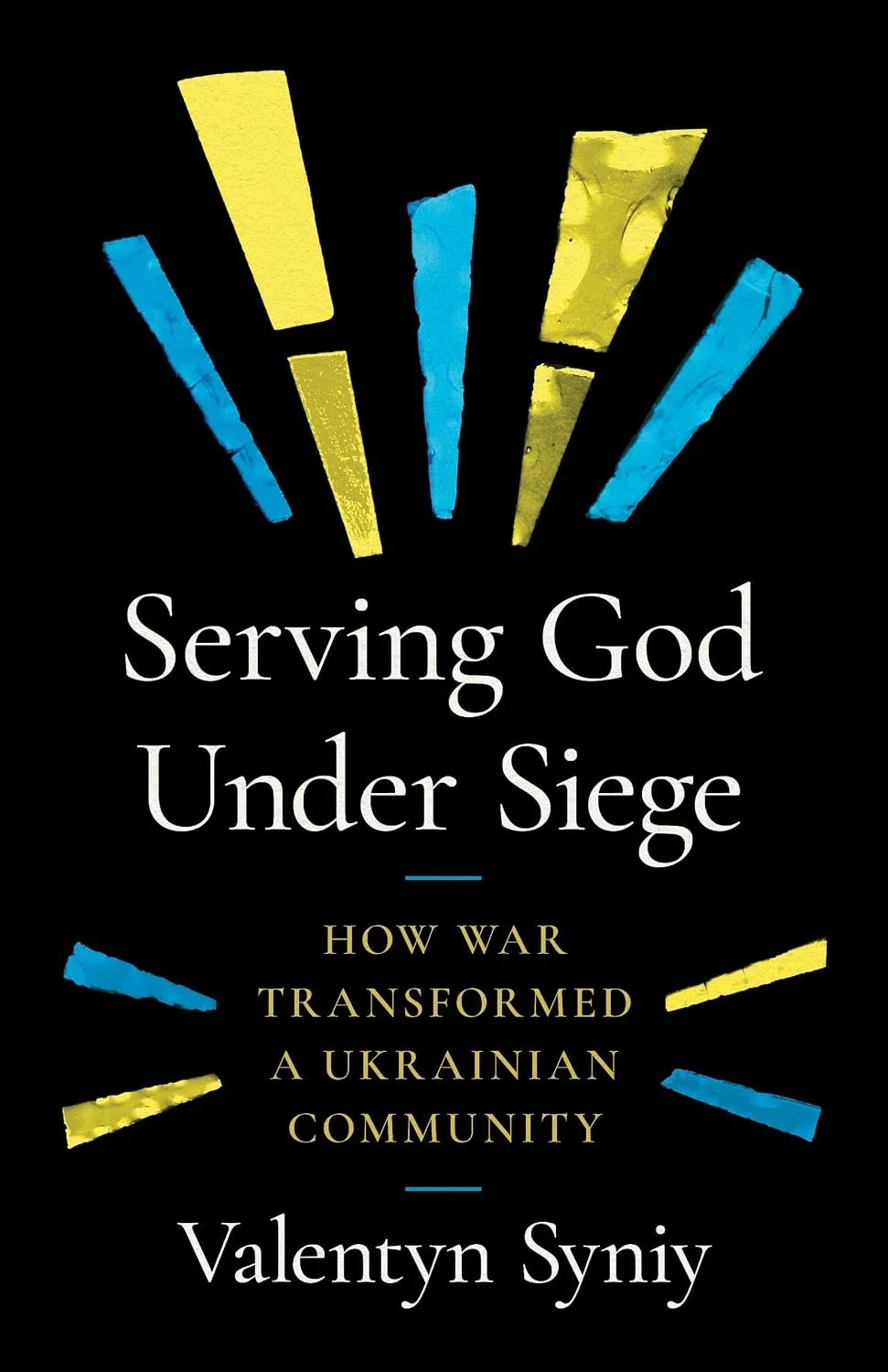
In his searing eyewitness account Serving God under Siege, Valentyn Syniy recounts how the Russian invasion of Ukraine in 2022 upended life for students, teachers, and staff of the Tavriski Christian Institute. As president of TCI, Syniy was responsible for evacuating the seminary community and leading them hundreds of miles to a safer location. Upon arrival, Syniy and his colleagues faced new challenges: where would everyone stay? How long would they live as refugees? How could ministry training continue during wartime?
What unfolded over the next nine months is a gripping story of faith and resilience amid fear and chaos. Displaced and dispossessed, the community courageously embraced new forms of Christian service. They poured their energies into the town that was sheltering them, ministering to neighbours in need and facilitating activities for local youth. They drove into combat zones to help shuttle people to safety. Despite the devastating news that their campus back home had been destroyed, they carried on with their educational pursuits, holding classes in makeshift spaces.
While showing how the war impacted the seminary, Syniyalso reveals how it affected him and his family—how within the chaos, for example, they carved out sacred space to celebrate his daughter’s wedding; how he worried about his elderly father, a pastor who refused to evacuate because he did not want to abandon his congregation; how it felt to see his home again after months of displacement and trauma. The result is a powerful account of the war’s impact on individuals as well as communities.
As Chris Wright wrote in his endorsement:
“God’s sovereign ability to bring good out of evil, without denying or diminishing the reality of evil itself, is a biblical truth as old as Joseph’s assurance to his brothers (Gen. 50:20) and as cosmically powerful as the cross itself. Russia’s unprovoked war of aggression, invasion, annexation and incalculable death and destruction against Ukraine, ranks among the most flagrantly unjust of all the terrifying evils so far in this twenty-first century. What good can possibly triumph over such evil? What possible mustard seeds of God’s kingdom can flourish in such poisoned soil? Valentyn Syniy’s searing but hope-filled story shows that they can and do. His voice speaks for many of his Ukrainian sisters and brothers, seminary leaders, pastors and teachers, who have courageously stayed and faithfully served their people with the hands and feet of Jesus. Even in the midst of intense personal suffering and bereavement, relentless and sleepless bombardment, and acute theological questioning, their mission has not changed, and their voice cries out to God and to the rest of God’s family. It’s a voice we must hear and a cry we must make our own.”
Jim Memory, co-director, Lausanne Europe and co-editor of Vista