The ill-fated attempt at an evangelical-Orthodox partnership in the 1992 Mission Volga remains a painful memory for enthusiasts on both sides
Read More
The ill-fated attempt at an evangelical-Orthodox partnership in the 1992 Mission Volga remains a painful memory for enthusiasts on both sides
Read MoreThe following resources are just a small selection of those available. If you know of other useful resources, please share them on our Facebook page:
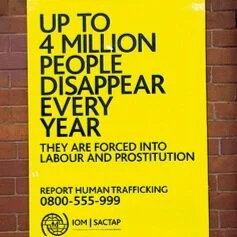
Read Moreit is clear that human trafficking in the EU in vast and expanding. The OSCE estimates that there are three million trafficked persons in the OSCE territory at any given time, and the International Labour Organisation (ILO) believes that there are currently around 880,000 people being exploited for their labour in Europe.
Read MoreWritten in 1994, the following statement from Kevin Giles appeared in Evangelical Quarterly, ‘No Christian theologian living today would support slavery. The slave has three defining characteristics: his/her person is the property of another human being
Read MoreWhat are the facts about human trafficking in Europe? This is a tremendously difficult question to answer for a number of reasons.
Read MoreThis is not an exhaustive list. If you are aware of other useful resources or networks, why not highlight them by commenting on our facebook page
Read MoreShort memories breed short-sightedness. For my generation who witnessed first hand the momentous events of 25 years ago, it is imperative to tell the stories to a generation of Europeans too young to remember, and to reflect on their enduring significance.
Read MoreMy first visit ‘behind the Iron Curtain’ was in 1970 with the Netherlands-Soviet Youth Friendship Society, a communist front group. I had just joined a small band of Bible Smugglers led by a daring young Dutchman called Brother Andrew
Read MoreDuring the early 80s, as I became more aware of world and regional politics, European politics was dominated by that apparently impregnable wall separating East from West and of the vast empire of the USSR whose ranks were massed behind it.
Read MoreIn the exciting days after the break-up of the Soviet Union, churches grew and revival seemed to be on its way. Nikolai Ivanov from The Bulgarian Bible League remembers his church in Sophia growing from 200 members to 5000 in less than three years.
Read MoreThese are two important works written in the years following the fall of the Berlin wall. Both of them emphasise the vital influence of the “soft powers” and the thousands of ordinary Christians whose lives made a real difference. Both are available second-hand at very low cost.
Read MoreThe printing of Bibles was not allowed during the 1950’s and 1960’s in Eastern Europe where the communist ideology reigned. This painful situation was recognized by some brave Christians from the West who dared to cross the Iron Curtain
Read MoreRight across Europe, there are rumours of a growing wave of church planting movements and God at work in amazing ways amongst Muslims and Iranians, the African diaspora and the Roma to name just a few.
Read MoreIn 2002, the European Baptist Federation announced an ‘Indigenous Missionary Partnership’ based on the simple observation that indigenous missionaries had an advantage linguistically, were trusted locally, were culturally more relevant, required no time to orient to their context, and were significantly cheaper to deploy
Read MorePeter J Farmer and his wife Marsha and 3 kids are based in Nottingham, UK. After a number of years engaged in Pioneer Mission locally and throughout the city and county of Notts they began travelling across the 12 regions of Britain
Read MoreMission agencies have engaged in church planting across Europe for many decades. Yet increasingly they are engaged in facilitating church multiplication through partnering with national churches rather than being the pioneers themselves.
Read MoreLooking from the inside, ‘we Europeans’ are much more aware of the mosaic of ethnic origins, languages, national and regional histories, political traditions, cultures, and lifestyles. Many of us are strongly attached to our particular identity, feeling ‘European’ only in a secondary or an accessory way.
Read MoreAccording to Evert, Northern Europe is mostly protestant, industrious, enterprising and economically developed, used to plurality of religious expressions, and largely secular. Using this description as a starting point, I would like to suggest three main challenges for mission in the Nordic context.
Read MoreOne in three Europeans belongs to a Slavic people group, by far Europe’s largest such grouping. Whilst these people share a common identity on one level, they are also sharply divided in terms of socio-cultural and religious identity.
Read MoreI have lived in France for the past 14 years involved in a ministry of grass-roots ecumenical cooperation in a Roman Catholic parish. The following elements strike me as being significant with regard to future mission.
Read More